
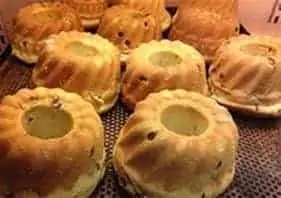
How did the Gugelhupf get its name? Where was it really invented? And what does apple strudel have to do with the Orient? Immerse yourself in the world of desserts. Since its foundation in 1786, the imperial and royal court confectioner Demel has been spoiling connoisseurs from all over the world with the finest sweets and desserts. Two extraordinary specialties, Gugelhupf and apple strudel , are part of the confectioner’s repertoire.
Bundt cake
First the Gugelhupf: The ingredients of this dessert are not complicated. The dough is made from flour, eggs, butter and raisins. Sometimes yeast is also added. The term “Gugel” is used to express the word “hood”. In Germany, this sweet temptation is called “Napfkuchen “. Preliminary forms of this dish were already known in Roman times. During excavations, cake tins were found that are similar to the shape of the containers in which this cake is prepared today.
The original Viennese Gugelhupf is a light and very digestible dish. A much more richly flavored version of this treat is called chocolate Gugelhupf. Legend has it that the Three Wise Men brought it back to Alsace from the Orient. To this day, the French are convinced that the Gugelhupf originated in France, more precisely in Ribeauvillé, where an annual Gugelhupf festival is still held today. According to another legend, the Archduchess of Austria and later Queen Marie-Antoinette took it with her to the French court in Versailles.
Viennese apple strudel
If you prefer something more fruity, the famous Viennese apple strudel certainly tastes better. However, this delicacy originates from the Orient. The history of the strudel, which is related to the Turkish dish “baklava”, makes for fascinating reading. The Orient, or more precisely the Arab world, is now thought to be the birthplace of this dish and its many variations, which has long since become a familiar dish in many European countries. In the middle of the 15th century, the Ottomans conquered Byzantium and it was during this era that the “strudel” and the pastry shell filled with apples and raisins are said to have found their way to Europe.
Time Travel Tip: You can try all the Viennese desserts in the approximately 2,000 cafés in Vienna. Right near Time Travel you will find
Image source: https://pixabay.com/de/photos/gugelhupf-kuchen-276784/