How long has the Vienna Naschmarkt existed and where is it located? What was it called in the past? What does the Naschmarkt mean today?
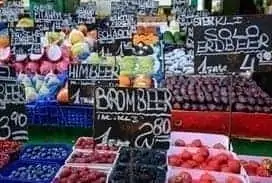
Food and drink from all over the world can be found at Vienna ‘ s Naschmarkt, the largest inner-city market in Vienna, right next to Karlsplatz. One side is adorned with food stores with a multicultural range of products, while the other side is for eating and drinking . Especially in summer, it is popular to spend your lunch break here or stop by for a drink in the evening. The pubs are usually open until midnight. Whether you fancy typical Austrian specialties, Asian, Turkish or Israeli food , with 120 market stalls there is something for everyone.
The Naschmarkt, which has existed since 1774, is Vienna’s largest inner-city retail market, covering around 2.3 hectares. Its predecessor was a fruit and vegetable market set up on the Freyung in the city. Due to ongoing disputes between the magistrate and the Schottenkloster monastery, this was relocated in 1780 to the princely Starhemberg Freyhaus, today’s Wiedner Hauptstraße – Resselgasse – Operngasse area.
The “ash market”
This former Carinthian gate market was initially known to the population as the “ash market” . A small milk market had established itself on the site of a former municipal ash and manure storage area . “Asch” was also a common name for the usual milk bucket made of ash wood. This later developed into the name Naschmarkt.
But as early as the beginning of the 19th century, delicacies with a hint of faraway lands were also available here, such as exotic sweets, dates and orange peel preserved in sugar.
In earlier times, there were more men than women at the stalls. But later the “Fratschlerinnen”, the “Höcklerinnen” or the “Höckler” took over the command at the Naschmarkt .
“Bolettenweiber “, who became famous for their loose mouths and variable use of swear words. They had well-known nicknames such as “Maschansker-Kadel”, “Krawall- Minerl ” , “Wäscher-Tonerl”, “Fischkopf-Reserl” etc.
However, the “Sopherl ” became synonymous with the Naschmarkt. The Viennese feature writer Vinzenz Chiavacci wrote about the “Sopherl vom Naschmarkt” every Sunday from 1883 in his column in the “Österreichische Volkszeitung”. An elementary counterpart to the “sweet Viennese girl”: rude, snotty and snotty-nosed . It is probable that she really existed, but there is no proof.
The taxes that the so-called “spinach guards” had to collect from the loud and defensive women’s regiment always remained a contentious issue. The name remained a derogatory term for the executive in Vienna, which wore green uniforms until 2005. On March 30, 1905 , the city council decided on the official name “Naschmarkt” for the market square between the Freihaus and the Wien River.
The Naschmarkt gained space
After the Vienna River had been regulated and built over, Otto Wagner planned a magnificent boulevard for the emperor from the Hofburg to Schönbrunn. However, these plans fell victim to the beginning of the First World War and the death of Otto Wagner. As a result, the market began to expand from the original area to the covered area above the Vienna River, from 13,500 m² to 36,000 m².
The architect Friedrich Jäckel was commissioned to build 57 sales halls made of wood with iron bracing. He designed them in the style of the Biedermeier style. Today they are
The Naschmarkt has become somewhat expensive for everyday shopping, but it is definitely popular, especially for tasting and sampling.
Time Travel Tip: Saturday breakfasts are very popular here and the weekly flea market also takes place here. Please note: the market is closed on Sundays !
More info: Naschmarkt – Opening hours Monday to Saturday, address, offer (wien.gv.at)
Image source: https://pixabay.com/de/photos/markt-fr%C3%BCchte-obst-lebensmittel-945222/