Where is the Wien Museum located? What can you visit there? What other museums are managed by the Wien Museum? What is the museum’s mission? When is the reopening planned after the renovation phase?
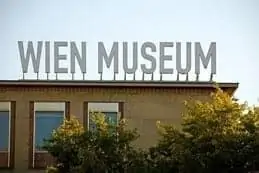
In April 1959 , the Vienna Museum was opened on Karlsplatz , the first new museum building of the Second Republic. Oswald Haerdtl was the architect of the modern building and also designed the interior.
Where were the collections on the history of Vienna previously housed? The Historical Museum of the City of Vienna had been housed in Vienna City Hall since 1887 . There had been plans for a museum of its own since the beginning of the 20th century . Otto Wagner already had plans, but two world wars were to intervene.
The inner courtyard was roofed over in 2002 . The museum provides a comprehensive overview of Vienna’s urban development from the Neolithic Age through the Roman period to the 21st century. One focus is also dedicated to the work of Gustav Klimt .
It is currently closed due to the redesign and is scheduled to reopen in fall 2023 . The
Other museums belonging to the Wien Museum
belong to
More info: VIENNA MUSEUM
Otto Wagner Pavilion Karlsplatz
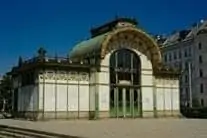
In the former station building, you can find out about the life and works of Otto Wagner. Here you can also see how many of Otto Wagner’s works could not be realized due to the conservative taste of Emperor Franz Joseph. Directly opposite is an identical pavilion with a café and a staircase to the U1/U2/U4 Karlsplatz. Vienna’s largest traffic junction is located beneath Karlslatz.
The watch museum
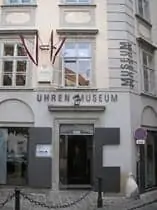
Palais Obizzi in the center of Vienna is home to the Clock museum. 1917 The collection was founded by the director Rudolf Kaftan and the poet Marie von Ebner-Eschenbach . It was also known as the house of ten thousand clocks and is a special feature throughout Europe, especially for clock fans.
Otto Wagner Hopavillon Hietzing
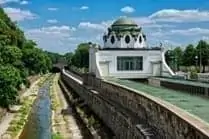
The pavilion , which served as an entry and exit point for the emperor and is located along the U4 line between Schönbrunn and Hietzing, can also be clearly attributed to Otto Wagner . It was opened in 1898, but was hardly ever used by Emperor Franz Joseph, although Wagner even incorporated neo-baroque elements in its construction for the emperor’s sake. The Hietzing light rail station used to be on this site, but was later demolished. Nowadays, exhibitions are held in the pavilion.
Vienna Museum Hermesvilla
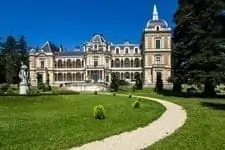
Emperor Franz Joseph had a fairytale castle built for his beloved Elisabeth (Sisi) in the middle of the
Lainzer Tiergarten to keep them more in Vienna, which unfortunately did not work. The architect was Karl Freiherr von Hasenauer, who built the building from 1882-86. According to the permanent exhibition, Sisi only spent a few days a year in the Hermes Villa.
Prater Museum
© CCO
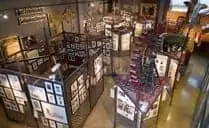
The Prater Museum is located in the Prater between the Giant Ferris Wheel and the main avenue, right next to the Planetarium . Old curious objects can be viewed. It provides an insight into the history of the Wurstelprater, Vienna’s largest amusement park.
The following musicians’ apartments can be visited:
Mozart House Vienna
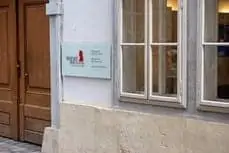
Mozart lived at Domgasse 5 right next to St. Stephen’s Cathedralfrom 1784-87 . It is his
Beethoven apartment Heiligenstadt
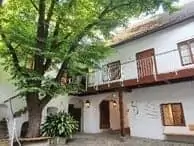
Ludwig van Beethoven spent the summer of 1802 at Probusgasse 6 in Heiligenstadt . Heiligenstadt had a spa and bathing establishment and had healing springs at the time. Beethoven sought to cure his incipient hearing problem here. He wrote the famous
“Heiligenstadt Testament” here, which was nothing more than a desperate letter to his brothers in which he expressed his concern about the state of his hearing.
Beethoven Pasqualati House
© CC BY SA 3.0 en
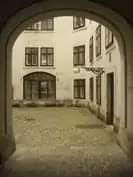
Johann Baptist Freiherr von Pasqualati was a patron of Beethoven and the house on the Mölker Bastei belonged to him. He rented it to Beethoven from 1804-1808 and from 1810-1814. He loved the view of the Vienna Woods from the top floor. Among other things, he wrote “Für Elise” and his only opera “Fidelio” there. As the actual apartment is rented out, the neighboring apartment is simply shown as a Beethoven memorial.
Haydn House
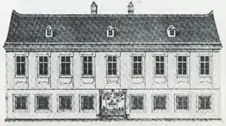
Joseph Haydn lived in this house in what is now Haydngasse 19 in Mariahilf from 1793 until his death in 1809 . He composed the “Creation” and the “Seasons” here. A separate room is dedicated to Johannes Brahms , who was an ardent admirer of Haydn .
Schubert birthplace
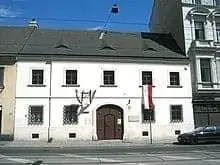
Franz Schubert was born at Nußdorferstraße 54 (9th district) on January 31, 1797 as the thirteenth child of almost 20 children. He spent the first four and a half years of his life here. The most important object of interest is the famous pair of glasses, which Schubert allegedly never took off, even at night, as he always wanted to be ready to compose. Around 50 paintings by the famous poet Adalbert Stifter, who also painted, are on display here.
Schubert star apartment
In Kettenbrückengasse 6, near the Naschmarkt, where Schubert died at the age of 31 of syphilis or as a result of typhoid fever, he spent only 2.5 months with his
brother Ferdinand. I came into the world for nothing but composing,” Schubert is said to have said about himself to a friend.
Johann Strauss apartment
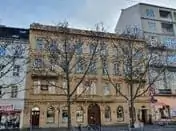
Johann Strauss Sohn (1825-1899) lived at Praterstraße 54 in the 2nd district in the 1860s and it was in this house that he composed the world-famous Danube Waltz . He was regarded as the Waltz King of Vienna, but he was also an operetta composer (Die Fledermaus). A special exhibit is the precious Amati violin , which is said to have been in his possession.
Excavation sites are also part of the Vienna Museum, such as the archaeological excavations on Michaelerplatz.
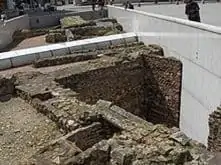
In 1989-91, under the direction of Hans Hollein, excavations were carried out on Michaelerplatz, directly in front of the main entrance to the Hofburg. Remains from the Roman camp suburb of Canabae came to light. These can be visited at any time and free of charge and are located in the middle of the city.
Virgil Chapel
© CC BY SA 4.0
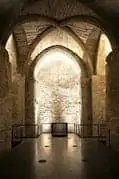
To this day, the Virgil Chapel at St. Stephen’s Cathedral U1 station in the middle of the city remains a mystery. It is said to have been built around 1250 and served as the crypt of a wealthy Viennese family from the 14th century . Above it was the Magdalen Chapel, which burned down at the end of the 18th century. As a result, the underground Virgil Chapel was filled in and fell into oblivion. It was discovered during the construction of the subway in 1973 and can be visited today, together with the Museum of the Middle Ages . Here you can find out how big Vienna was in the Middle Ages, who was mayor and what went on in the city.
Roman Museum
© CC BY SA 4.0
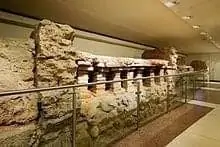
The underground Roman Museum is located on Hoher Markt, one of the oldest squares in Vienna. Officers and tribunes were based in this area. Ceramics, gravestones and other objects bear witness to the former Roman camp of Vindobona.
– Neidhart frescoes
Anyone interested in medieval murals is in good hands in the Neidhart Festival Hall at Tuchlauben 19. Beginning of the 15th century. the banqueting hall of the Viennese cloth merchant Michel Menschein was decorated with them. They are considered to be the oldest surviving secular wall paintings in Vienna. A cycle of paintings depicting scenes from the life of the minstrel Neidhart von Reuental . They were discovered in 1979 during renovation work and offer a glimpse into everyday medieval life in Vienna.
Time Travel Tip: Every 1st Sunday of the month, all the museums listed here that are part of the Vienna Museum offer free admission!