Where did the Burgtheater used to be and how long has this institution existed? Who were famous Viennese Burgtheater actors? What makes the Burgtheater so special?
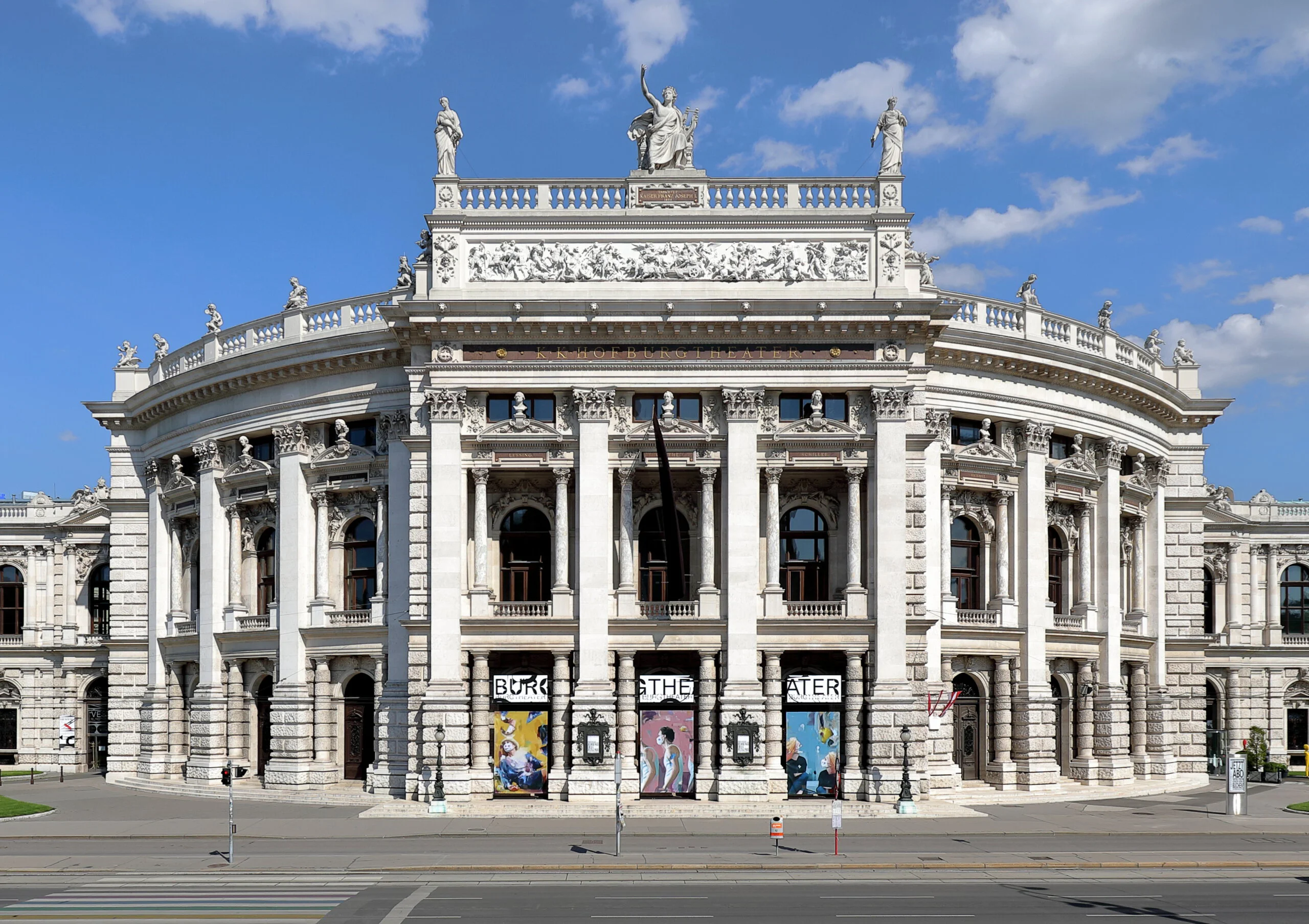
The Burgtheater is the largest spoken theater in the German-speaking world. Playing at the Burg, as it is known in Vienna, is the goal of every theater actor. End of the Built in the 19th century by Gottfried Semper (Semperoper in Dresden) and Karl von Hasenauer.
After 14 years of construction, it was inaugurated on October 14, 1888 with Grillparzer’s “Esther” and Schiller’s “Wallenstein’s Camp”. The location is exactly opposite the town hall and the Volksgarten is right next to it.
The Burgtheater has a long tradition. The “old” Burgtheater was located on Michaelerplatz, where the main entrance to the Hofburg is located today. A
“The castle” as a distinguished meeting place
It already applied in the 19 century particularly elegant in the “castle” to go. Bourgeoisie and nobility met and gossip was exchanged, preferably about the castle actors. The actress Charlotte Wolter became legendary for her special “Wolter scream” . Attila Hörbiger and Paula Wessely were among the audience favorites in the 1940s, as were their children and brother Paul Hörbiger later on. Josef Meinrad was so popular that the square next to the Burgtheater was named after him.
Initially, the Burgtheater, whose exterior is reminiscent of the Semperoper in Dresden, was very popular due to its magnificent architecture and technical innovations (electric lighting). Soon, however, the Viennese were not sparing in their criticism of the poor acoustics . This problem was solved by remodeling the auditorium in 1897. After that, the theater’s good reputation was unstoppable and it developed into a meeting place for the rich and beautiful.
A special feature connects the Burgtheater with the Volksgarten. An underground ventilation system (Schwammerl) draws the scent of roses from the Volksgarten into the Burgtheater. Emperor Franz Joseph wanted to breathe in the scent of roses in the Burgtheater. The stale air is released through the roof. There used to be showers and sun loungers on the roof for the actors, but these were no longer provided after the damage during the Second World War.
In 1945, during the great air raid on Vienna, the Burgtheater was hit by bombs and completely burnt out. The Ronacher (now a popular musical theater) was used as an alternative venue until the Burgtheater was reopened on October 14, 1955.
Program & Scandals
There have also been negative headlines about the “Burg”.
As with the Vienna State Opera, the Burgtheater also offers a repertoire program. This means that the program changes every day. The Burgtheater also includes the Akademietheater, the Vestibül and the Kasino am Schwarzenbergplatz.
In summer, during the play-free period, the Burgtheater serves as a beautiful setting for the dance festival “ImPulsTanz”, one of Europe’s largest dance festivals.
Time Travel Tip: You can admire the ceiling painting in the staircase during the guided tours, which take place daily in summer during the intermission and are adapted to the performance schedule during the rest of the year. This was designed by Gustav Klimt, his brother Ernst and his colleague Franz Matsch .
More info: Burgtheater
Image source: https://commons.wikimedia.org/wiki/File:Wien_-_Burgtheater,_Hauptfassade.JPG