At what age did Gustav Klimt’s career begin? What role did women play in his life? And why is he still one of Vienna’s most famous artists today?
Anyone who visits Vienna will encounter the name Gustav Klimt everywhere – in the Belvedere, in the Secession or on the traces of Viennese Art Nouveau. His life was just as fascinating as his art.
The early start of an extraordinary career
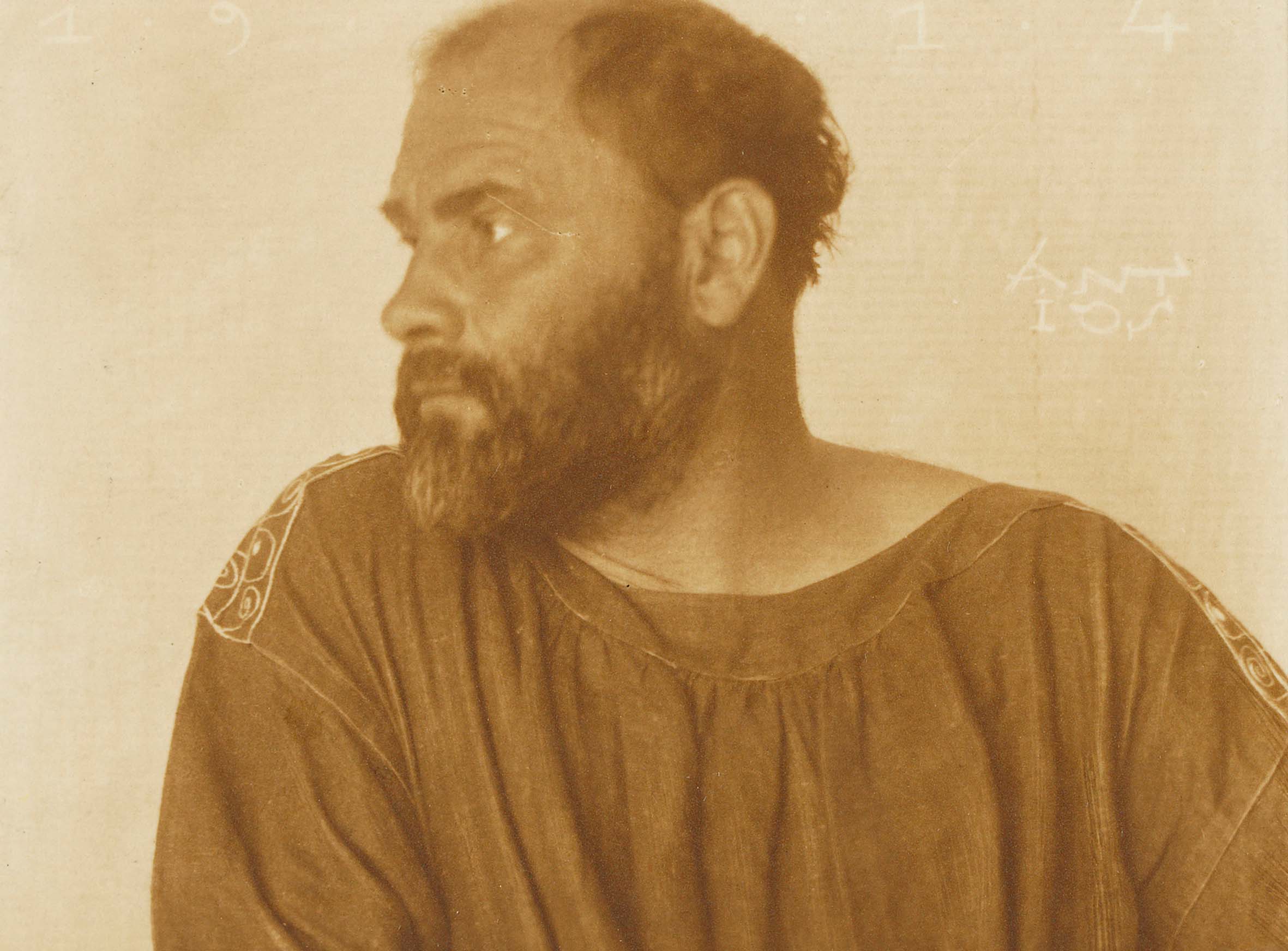
Gustav Klimt was born on July 14, 1862 in Baumgarten near Vienna. His artistic talent became apparent early on: at the age of 14, he was awarded a scholarship to the School of Arts and Crafts at the Austrian Museum of Art and Industry – now the University of Applied Arts Vienna.
As the second of seven children of the Bohemian goldsmith Ernst Klimt, he grew up in modest circumstances. Together with his brother Ernst Klimt and the artist Franz Matsch, he founded the so-called Künstlercompagnie in 1883. The trio received prestigious commissions and designed theaters, palaces and villas in Vienna and at spas in the monarchy. Their most important works include
- the interior of the Vienna Burgtheater
- Decorations in the Hermesvilla
- the staircase of the Kunsthistorisches Museum Vienna
Klimt thus became a sought-after artist of the Ringstrasse era at an early stage.
The break with tradition and the birth of a new style
Around 1890, Klimt began to break away from academic painting. He developed the unmistakable pictorial language that is associated with Vienna around the world today: decorative surfaces, gold ornamentation and symbolist imagery.
A personal turning point followed in 1892 with the death of his father and brother Ernst – an event that had a lasting influence on his artistic development.
The scandal surrounding the faculty pictures
Two years later, together with Franz Matsch, he was commissioned to paint the ceiling of the ceremonial hall at Vienna University, the so-called faculty paintings, which were the subject of fierce criticism. Klimt wins international prizes with these works, but is met with hostility in Vienna. He returns the commission for “Jurisprudence”, “Medicine” and “Philosophy“.
The Vienna Secession: art revolution in Vienna
In 1897, Klimt left the conservative artists’ association and became co-founder and first president of the Vienna Secession. The aim was to bring modern art to Vienna and promote new forms of expression.
One of his most important works from this period is the Beethoven Frieze, which can still be seen today in the Secession building and is one of the most important sights for art lovers in Vienna.
Women as muse, inspiration and myth
Few artists are as closely associated with female portraits as Gustav Klimt. Women were a central theme of his work – as patrons, muses and companions.
In 1902, he painted a portrait of Emilie Flöge, a fashion salon owner and his closest confidante. The two had a lifelong relationship and spent many summers together at Lake Attersee, where they created numerous landscape paintings.
Klimt was also known for his eventful love life in his private life: He had a total of six children with three women. His early muses included Alma Mahler.
“The Kiss” and international fame
At the beginning of the 20th century, Klimt reached the peak of his so-called Golden Period. His most famous work was created during this time:
“The Kiss” (1908)
The painting was first presented at the Vienna Art Exhibition and is now one of the most famous works of art in the world. Visitors can admire it at Belvedere Palace – one of the most visited museums in Austria.
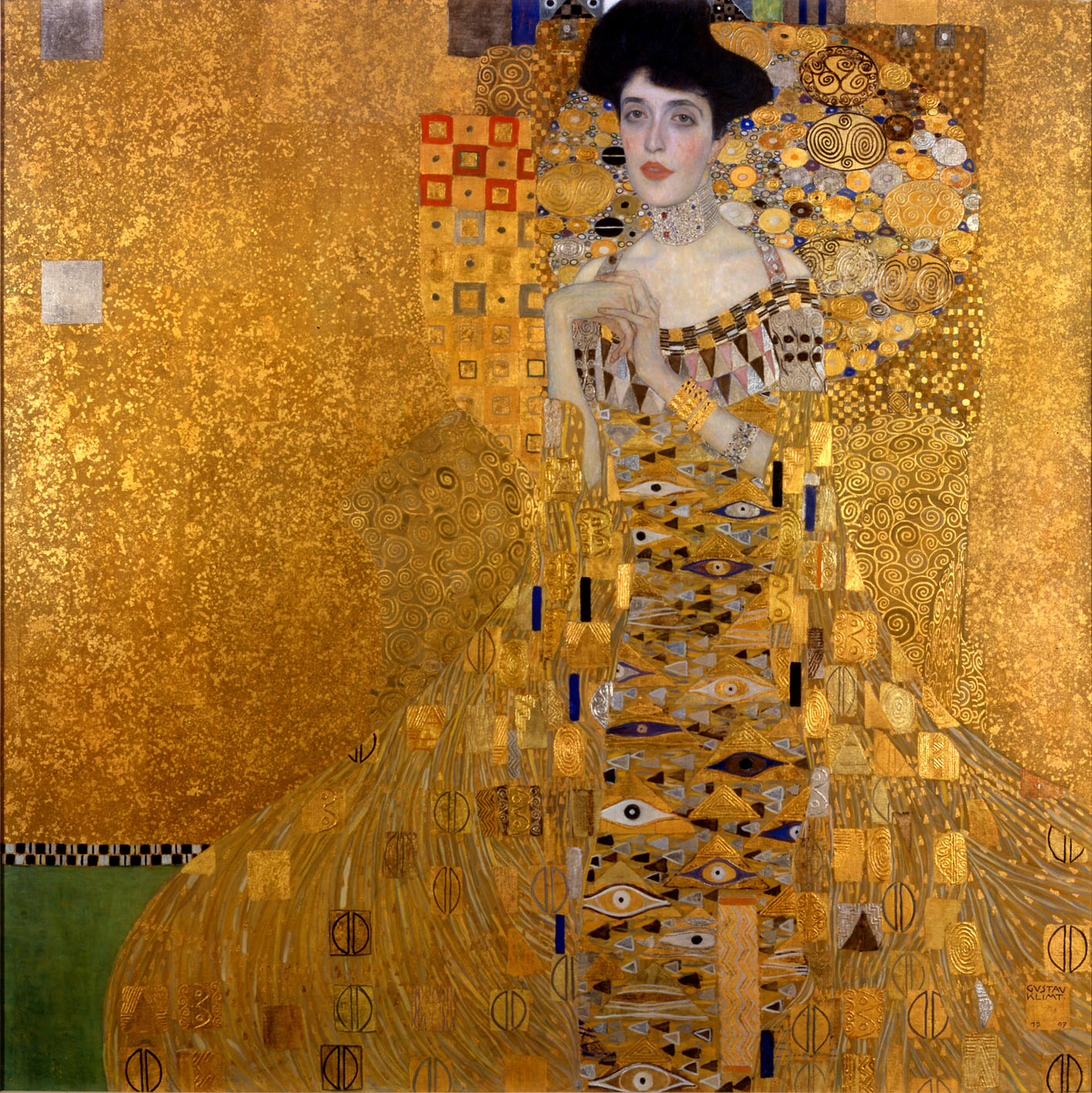
The portrait “Adele Bloch-Bauer I”, now in the Neue Galerie New York, also made Klimt internationally famous and became world-famous through a spectacular restitution case.
Influence on Viennese Art Nouveau
Gustav Klimt died of a stroke on February 6, 1918. His final resting place is at the Hietzing Cemetery in Vienna. Gustav Klimt is considered a central representative of Viennese Art Nouveau and influenced an entire generation of artists. He had a particularly strong influence:
- Egon Schiele
- Oskar Kokoschka
To this day, his works are symbolic of Vienna’s cultural heyday around 1900.
Time Travel Tip
Klimt’s birthplace no longer exists today. However, his last studio – the Klimt Villa in Vienna-Hietzing – can be visited and provides a unique insight into the artist’s life.