With up to 5,000 visitors every year, the Vienna Opera Ball is one of the biggest cultural events of the year in Vienna. On February 9, 1956, the Vienna State Opera was transformed into the most beautiful ballroom in the world for the first time in the Second Republic. What important historical event forms the basis of the Viennese balls? What requirements are necessary to be allowed to open it? The legendary parties and balls held on the occasion of the Congress of Vienna (1814-1815) form the basis of the many balls in Vienna. Since then, people in Vienna have been dancing and celebrating very exuberantly during the carnival season (officially from 11.11. to Shrove Tuesday). With the exception of the revolutionary years in the mid-19th century, when no one felt like dancing, the demand for balls increased rapidly. The events at the Paris Opera served as a great model.
However, Emperor Franz Joseph initially forbade a dance festival in the k.k. Court Opera Theater, which opened in 1869. He feared tumultuous scenes similar to those at the Paris Opera. The
The crowd was enormous and the fine sounds were almost drowned out. It was only when Eduard Strauss took the baton at midnight that the ball began. His specially composed opera soirée polka was the highlight of the evening.
The first “real” opera ball
The first “real” opera ball was finally held on 26 January 1935 and immediately became the undisputed highlight of the carnival. It only came to a temporary end after the outbreak of the Second World War in 1940. When
For the Vienna Opera Ball, at which approx.. 5,000 guests the opera is opened up from the cellar to the attic. In addition to the ballroom, there are several restaurants, wine taverns, a Viennese café, a disco and, most recently, a tattoo studio. Even during the Opera Ball, the
Time Travel Tip: Experiencing a ball night in Vienna during the ball season is a very special highlight. Many dance schools offer a few
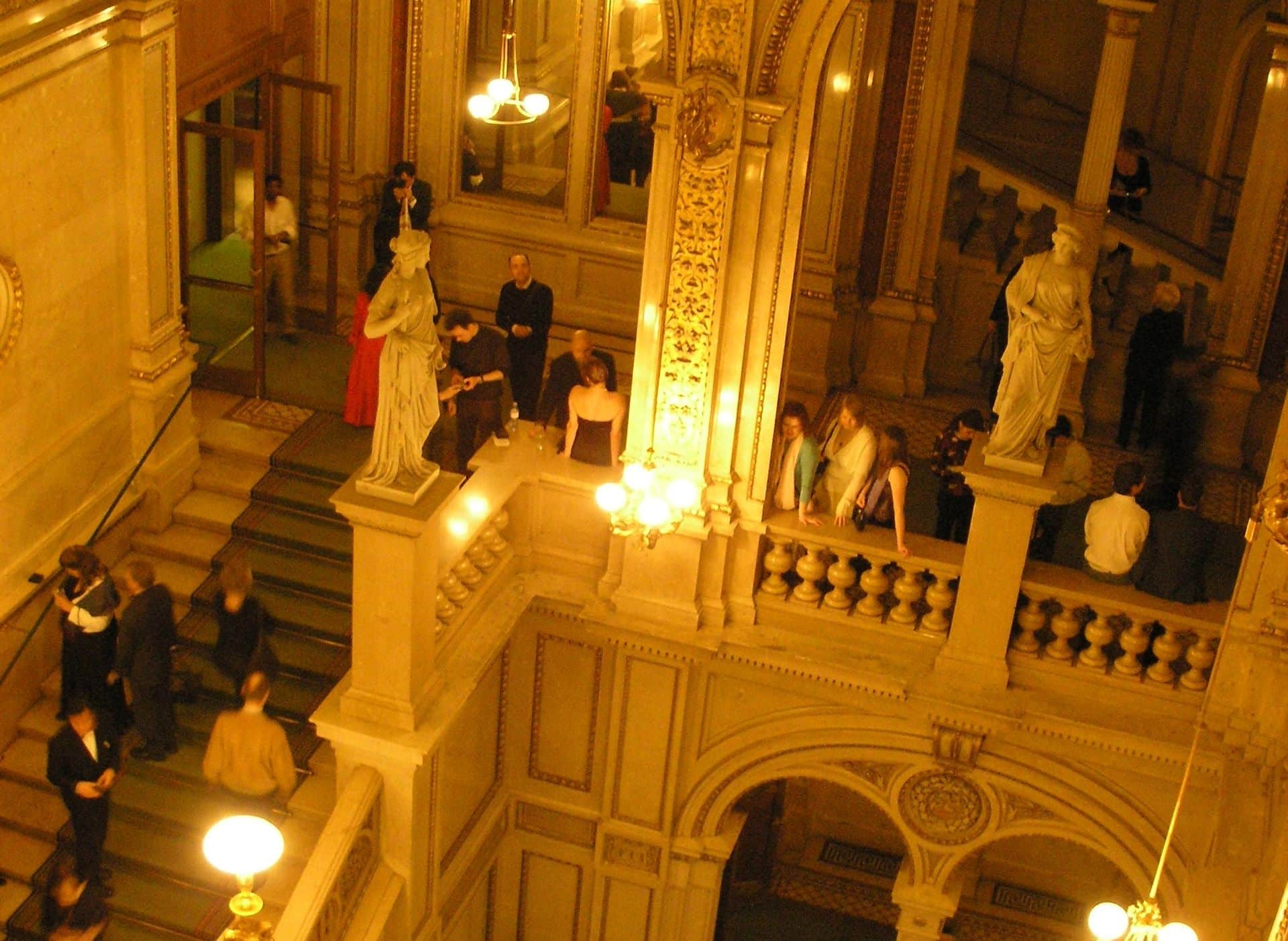
Image source: https://commons.wikimedia.org/wiki/File:Staatsoper_Vienna_006f.jpg